Everything a swarm needs to ship
Built around autonomous work: isolated environments that never collide, proof on video, deep git, automations beyond code, and a company brain your team shares.
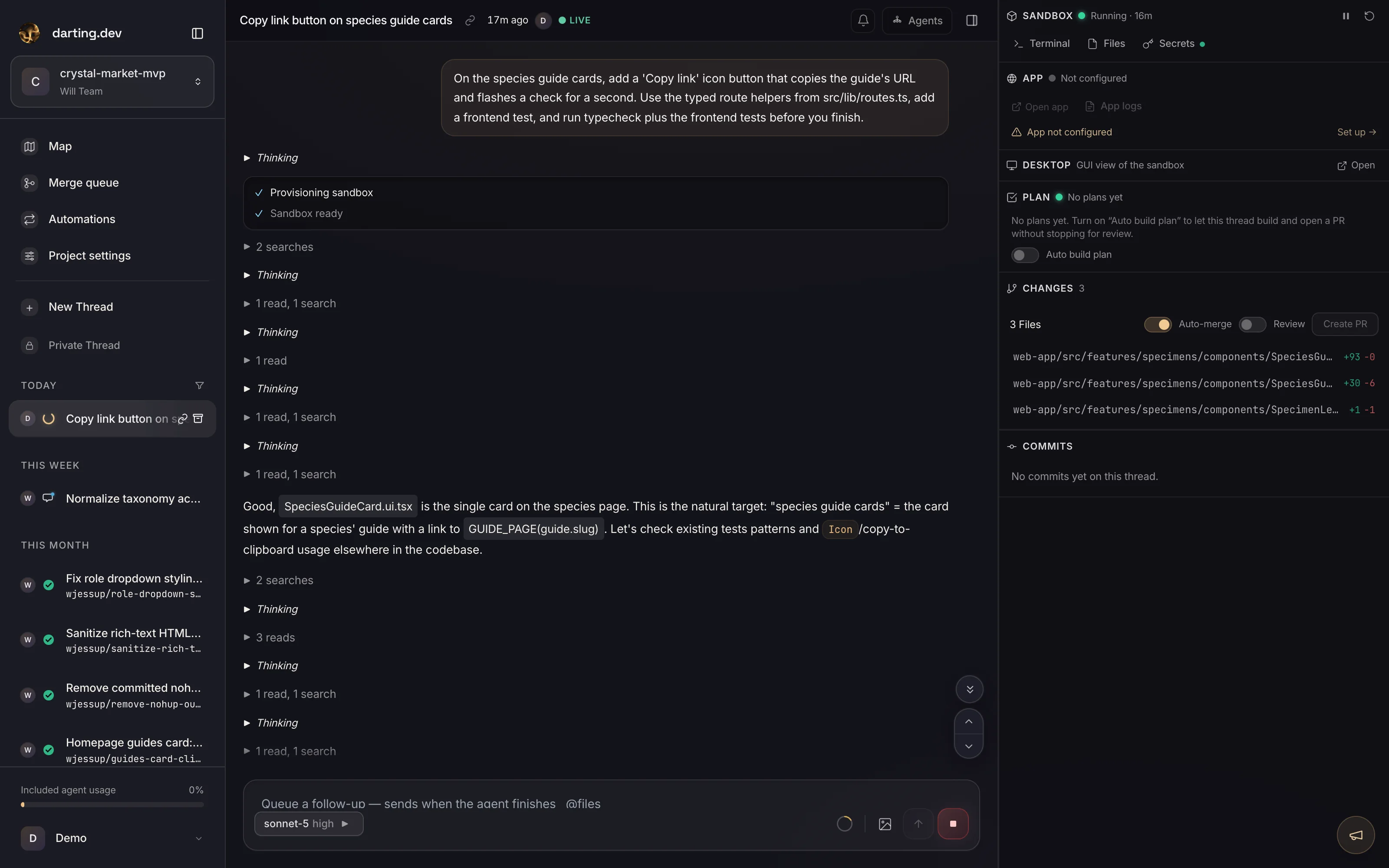
Parallel work that never collides
Every thread runs in its own cloud sandbox, branched from main. Thread A's edits can't fail the tests thread B is running — so parallel work goes at full speed without tripping over itself, and you don't pay for phantom failures.
- One sandbox per thread — no shared filesystem
- Heavy builds and test suites run off your machine
- No worktrees, .env copying, or port juggling
Knowledge that compounds
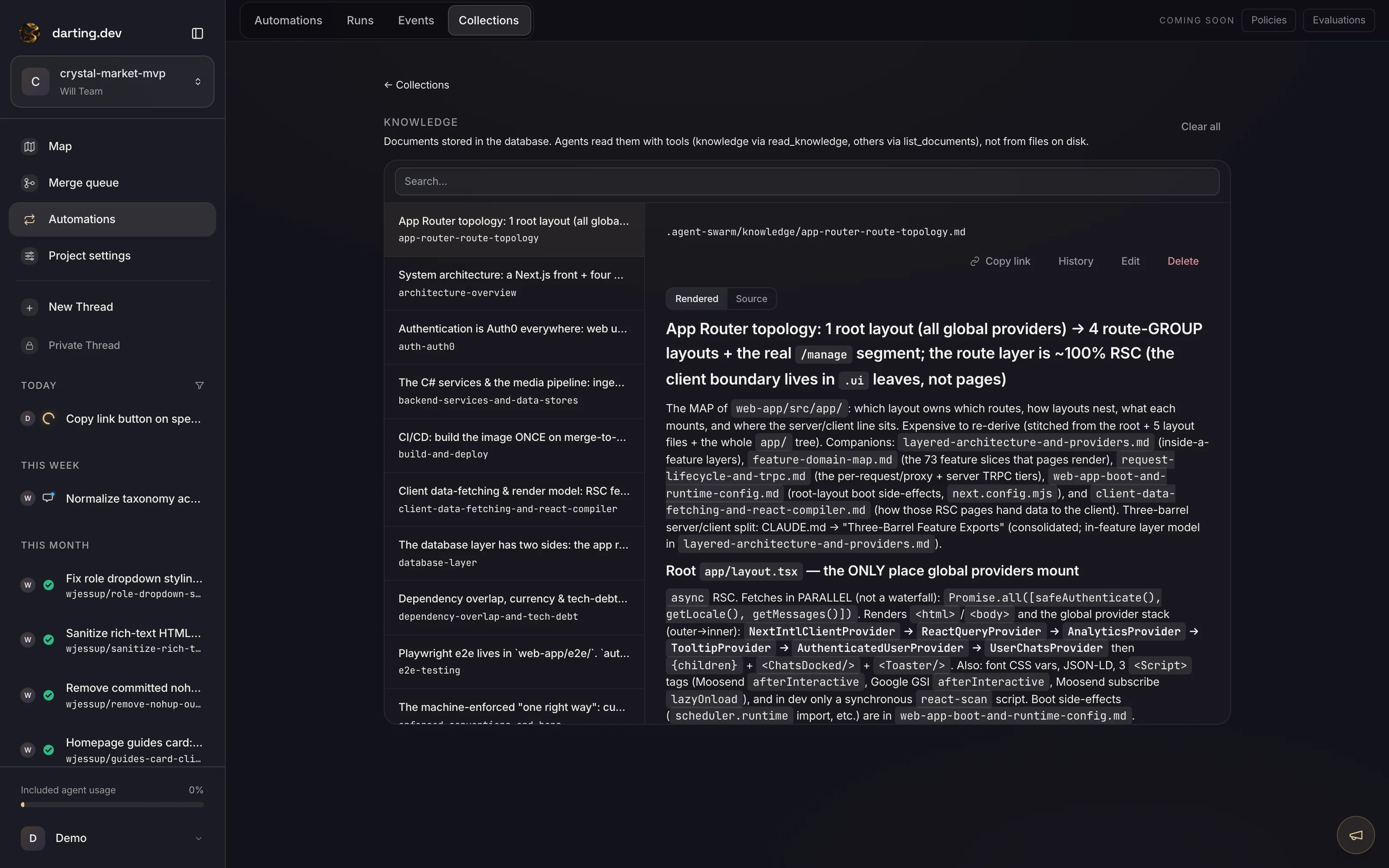
A background agent reads your codebase and writes a materialized knowledge base — system architecture, data model, conventions, the security model — as structured documents. Every agent starts grounded in it, your whole team shares it, and it stays current as the code changes.
- Deep docs on architecture, data model & security
- Shared across the team, kept current automatically
- A context inspector shows what each agent knows
Standing agents that never sleep
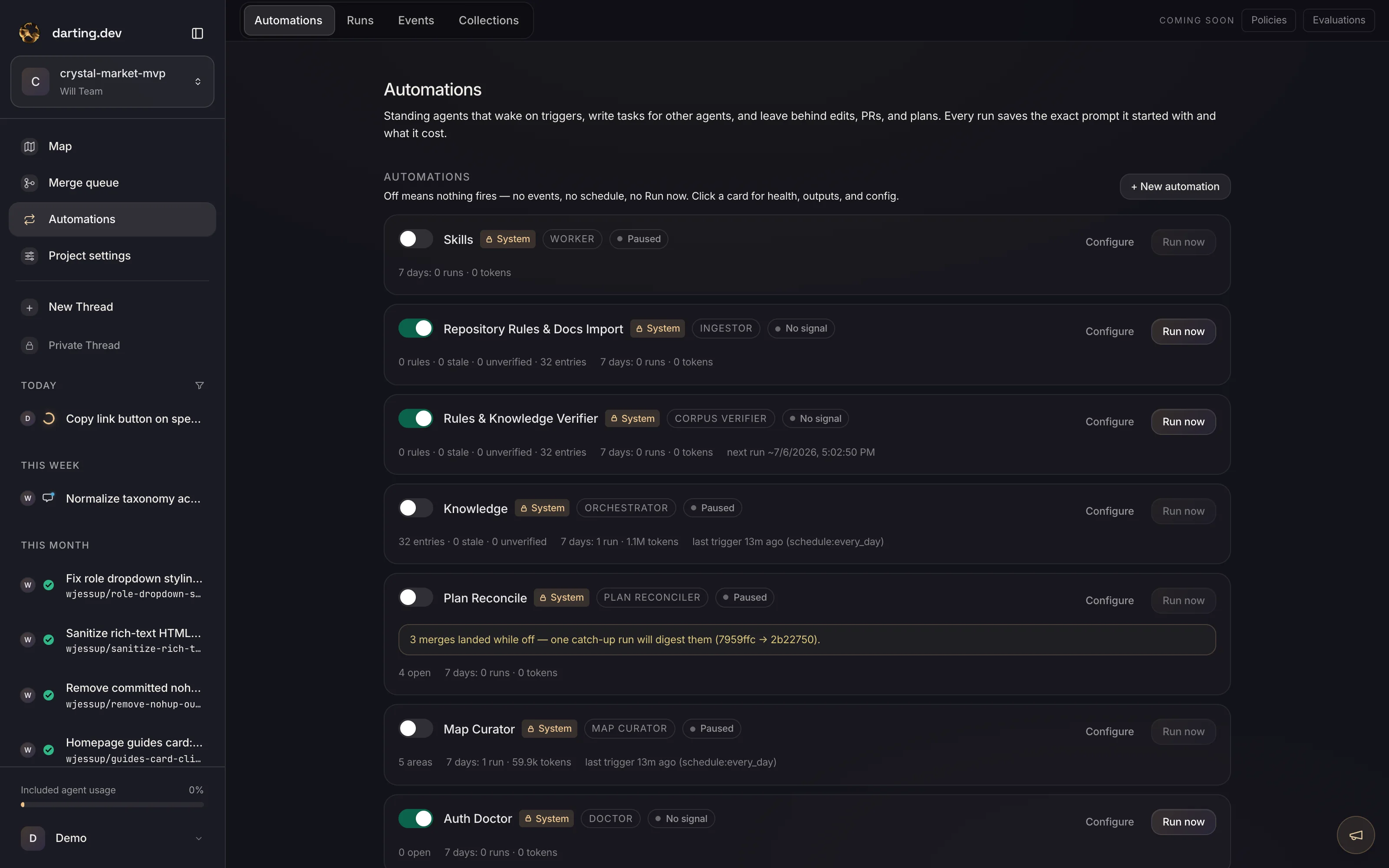
Beyond the chat: automations wake on schedules and triggers to import repository rules, verify knowledge stays true, curate the project map, propose ideas, and run health checks. Every run records the exact prompt it started with and what it cost.
- System automations keep knowledge and the map current
- Doctors probe auth, preview URLs, and app health
- Per-run telemetry: tokens, cost, and full provenance
The rest of the toolkit
Fixes you can watch
Agents drive the real UI like a person — reproduce the bug, confirm the fix actually works, then send a video summary. Review the proof and merge in minutes, not hours.
Git-native, always in sync
PRs open and stay current automatically. When a teammate merges to main, every thread sees how far behind it is and updates in a click — so work never drifts out of date.
Zero environment babysitting
No worktrees to juggle, no .env to copy, no remembering which server runs on which port. Every sandbox boots configured and ready.
Context you can see
Best-in-class tools to inspect, debug, and shape exactly what each agent knows — watch context get assembled and keep project knowledge sharp.
A whole team, in parallel
Run many agents at once — a planner explores while a coder builds and a tester verifies. No one blocks anyone else.
Ship your next feature with a swarm
Spin up your first project in under a minute. Bring a git repo or start from an empty one.